
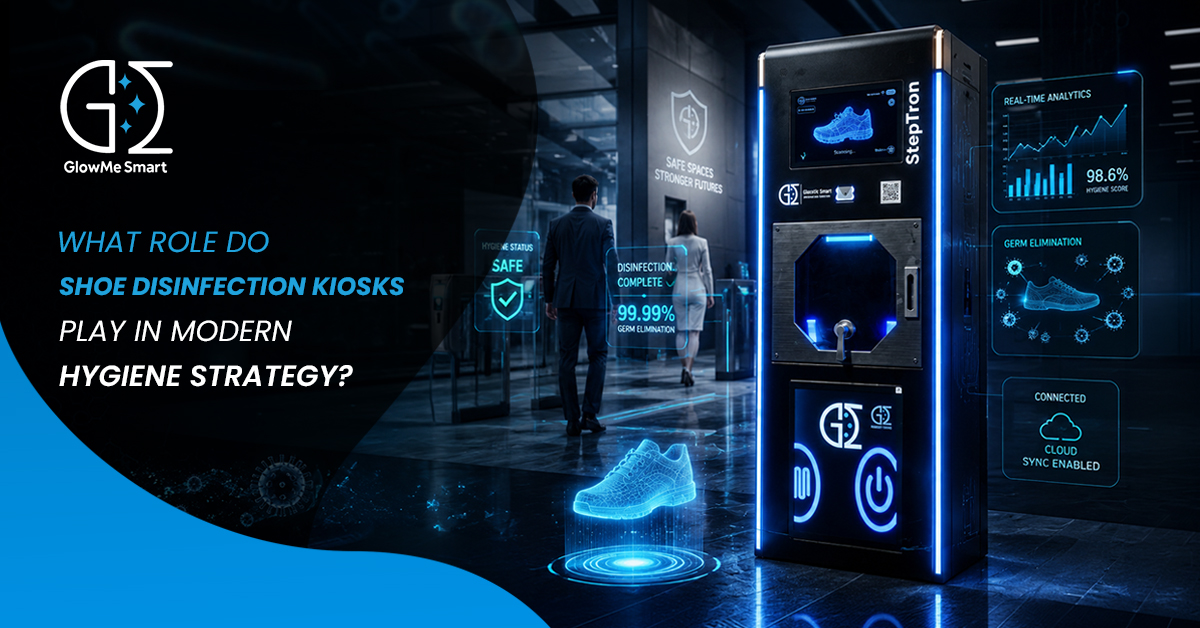
A well-planned shoe disinfection kiosk strategy is no longer a premium add-on for elite facilities. It is rapidly becoming a baseline expectation across gyms, hospitals, hotels, and corporate spaces that take hygiene infrastructure seriously. Footwear enters every facility carrying contamination from outside environments, and in most Indian commercial spaces, that contamination travels unchecked from the entrance to every surface beyond it. GlowMe Smart StepTron was built specifically to stop that transfer at the point it happens, before it moves deeper into the building.
Modern hygiene strategy is not just about cleaning what is already dirty. It is about intercepting contamination before it spreads. That shift in thinking is what makes shoe disinfection kiosks a strategic facility decision rather than a cosmetic one.
Why Are Shoe Disinfection Kiosks Becoming a Facility Standard?
Commercial facilities across India are moving towards proactive hygiene systems rather than reactive cleaning schedules. Shoe disinfection kiosks sit at the entry point of this shift, addressing contamination at its source rather than managing it after it has spread.
GlowMe Smart’s shoe disinfection kiosk positions itself as infrastructure rather than an accessory, running a four-stage automated cycle of sterilisation, disinfection, deodorisation, and complete drying without any staff involvement.
Key reasons facilities are adopting shoe disinfection kiosks as standard:
- Entry-point interception: Contamination is stopped at the door before it reaches gym floors, hospital wards, or hotel corridors.
- Automated operation: The kiosk runs every cycle without staff oversight, removing inconsistency from the hygiene process entirely.
- Compliance documentation: Every cycle is logged, giving facility managers auditable hygiene data for internal review or accreditation purposes.
- Visitor confidence: A visible, professional hygiene system at entry communicates clearly that standards inside the building are actively maintained.
- Odour control: Shoe deodorisation at entry reduces persistent odour issues in enclosed facilities like gyms and locker-adjacent spaces.
How Does a Shoe Disinfection Kiosk Fit Into an Existing Hygiene Framework?
A shoe disinfection kiosk does not replace a facility’s existing cleaning programme. It strengthens it by addressing the one gap that floor cleaning, air purification, and surface sanitisation all leave open: the contamination arriving continuously on the soles of every person who walks through the door.
GlowMe Smart’s shoe disinfection kiosk integrates into existing entry layouts without requiring plumbing, civil work, or structural changes. A standard power connection is all that is needed, and the unit is operational within hours of installation.
Where the GlowMe Smart shoe disinfection kiosk fits within a broader hygiene strategy:
- Before surface cleaning: Reducing what enters the facility directly reduces the contamination load on floors and surfaces throughout the day.
- Alongside air quality systems: Shoe-borne bacteria that reach indoor floors can become airborne through foot traffic, making entry hygiene a supporting layer for air quality management.
- Within accreditation frameworks: Hospitals and clinical facilities require documented hygiene measures at entry, which a shoe disinfection kiosk provides through IoT-connected cycle logging.
- As a staff hygiene protocol: Corporate offices and cleanroom environments can deploy a shoe disinfection kiosk at staff-only entry points as part of a structured decontamination process.
Which Commercial Spaces Benefit Most from a Shoe Disinfection Kiosk Strategy?
Not every facility faces the same contamination profile, but the venues where shoe hygiene has the most direct operational impact share one characteristic: high daily footfall combined with hygiene-sensitive interiors.
| Venue Type | Primary Hygiene Need | StepTron Benefit |
| Gyms and Fitness Centres | Fungal spore and odour control at locker entry | Full deodorisation and sterilisation per cycle |
| Hospitals and Clinics | Pathogen elimination at ward and staff entry | Logged cycles for audit and accreditation |
| Hotels and Guest Houses | Guest experience and floor hygiene standards | Dry, clean footwear at lobby entry |
| Corporate Offices | Staff entry contamination control | Contactless, unattended operation at entry |
| Cleanrooms and Labs | Zero-tolerance decontamination at all entry points | Repeatable, documented disinfection cycle |
| Petrol Stations and Fleet Hubs | Work boot decontamination and odour management | ComboTron model handles helmets and shoes together |
GlowMe Smart has deployed StepTron units across all six venue categories listed above, with models configured specifically to match the footfall volume and hygiene requirements of each environment.
What Does a Four-Stage Disinfection Cycle Actually Deliver?
Most hygiene kiosks in the market address one or two stages of shoe contamination. GlowMe Smart’s shoe disinfection kiosk runs a complete four-stage process in a single automated cycle, which is what distinguishes it from spray mats, UV-only cabinets, and manual protocols.
The four stages and what each one contributes:
- Sterilisation: UV-C light disrupts and eliminates bacteria, viruses, and fungal spores on shoe surfaces from sole to upper.
- Disinfection: Ozone penetrates recessed areas, fabric fibres, and internal lining that UV-C line-of-sight cannot reach independently.
- Deodorisation: Odour-causing bacteria and sweat residue are eliminated at the source rather than masked by fragrance.
- 360° Warm Air Drying: Internal and external drying zones remove all residual moisture, leaving shoes completely dry and preventing the damp conditions in which fungi and bacteria return fastest.
The drying stage is where GlowMe Smart StepTron separates itself most clearly from competing solutions. Shoes that exit a cycle still damp recontaminate faster than shoes that were never treated. Complete drying is not a comfort feature. It is the final stage of the hygiene process.
How Does StepTron Support Revenue Generation Alongside Hygiene?
A shoe disinfection kiosk strategy does not have to operate purely as a cost centre. GlowMe Smart has built multiple deployment and business models into StepTron that allow facility operators and location owners to generate revenue directly from the kiosk.
GlowMe Smart shoe disinfection kiosk deployment models and how each generates value:
- Pay per use: Users pay per cycle via contactless payment, including UPI, cards, and digital wallets, with no staff required to manage transactions.
- B2B revenue model: Facility operators charge users per cycle and collect revenue automatically while the kiosk manages payments and logs sessions.
- Free service model: Businesses offer shoe disinfection as a complimentary facility benefit, using it as a differentiator for gyms, hotels, and corporate spaces.
- Leasing option: No upfront capital is required, making deployment accessible for facilities that want the hygiene benefit without full purchase commitment.
- Screen-based advertising: The 27-inch display model turns idle cycle time into an active media space for facility announcements or third-party advertising revenue.
Is a Shoe Disinfection Kiosk a Long-Term Facility Investment?
The operational case for a shoe disinfection kiosk strengthens over time rather than diminishing. GlowMe Smart shoe disinfection kiosk requires a standard power connection, no plumbing, and no dedicated technical staff to run it. The IoT connectivity means cycle data, usage volumes, and performance metrics are accessible remotely, reducing the supervision burden on facility management teams.
What makes a shoe disinfection kiosk a durable, long-term investment:
- No structural dependency: Installation requires no civil work, making relocation or redeployment straightforward as facility needs change.
- Scalable models: Single compartment, dual compartment, and ComboTron configurations mean the right unit can be matched to current footfall and upgraded as volume grows.
- Low operational overhead: Automated operation, contactless payment, and remote monitoring reduce the day-to-day management requirement to near zero.
- CE-certified hardware: GlowMe Smart’s certification standard means the unit is built to perform consistently across the operational lifespan, not just at installation.
Every GlowMe Smart Shoe Disinfection Kiosk is built to run independently, log every cycle, and deliver consistent shoe hygiene from the first visitor to the last. Contact GlowMe Smart today to deploy Shoe Disinfection Kiosks at your facility from day one.
FAQs
1. What is a shoe disinfection kiosk and how does it work?
A shoe disinfection kiosk uses UV-C light, ozone, and steam in a single automated cycle to sterilise, disinfect, deodorise, and dry footwear completely without any staff involvement.
2. Which venues should install a shoe disinfection kiosk?
Gyms, hospitals, hotels, corporate offices, cleanrooms, and transit facilities benefit most, as high daily footfall means continuous shoe-borne contamination entering the building every day.
3. How long does a StepTron disinfection cycle take?
GlowMe Smart’s shoe disinfection kiosk completes the full four-stage cycle quickly enough to handle high-footfall entries without creating queues or disrupting visitor flow at the entrance.
4. Can a shoe disinfection kiosk generate revenue for my business?
Yes. GlowMe Smart offers a pay-per-use model where users pay per cycle via UPI or card, allowing facility operators to earn revenue automatically with no additional staff cost.
5. Is StepTron suitable for hospitals and clinical environments?
Yes. GlowMe Smart’s shoe disinfection kiosk is IoT-connected and logs every disinfection cycle, providing the documented hygiene records that hospitals and clinical facilities need for audits and accreditation processes.
6. What makes StepTron different from a standard UV sanitising cabinet?
GlowMe Smart’s StepTron adds ozone penetration, steam sterilisation, and 360-degree drying to UV-C, completing a four-stage cycle that most UV-only cabinets do not offer at all.